
Skip links

Preventive Maintenance (PM)

Stay ahead of breakdowns with scheduled maintenance that actually gets done

What this solves

Most teams don’t struggle to create a maintenance plan—they struggle to keep it consistent over time. Preventive tasks slip during busy periods, checks get ticked off without proof, and the same faults keep coming back because there’s no clear history.

Margin Resolve turns preventive maintenance into a practical routine: schedule it, assign it, complete it with evidence, and report on what’s done vs overdue.

Margin Resolve makes store walks consistent and measurable across every site.

How it works in practice

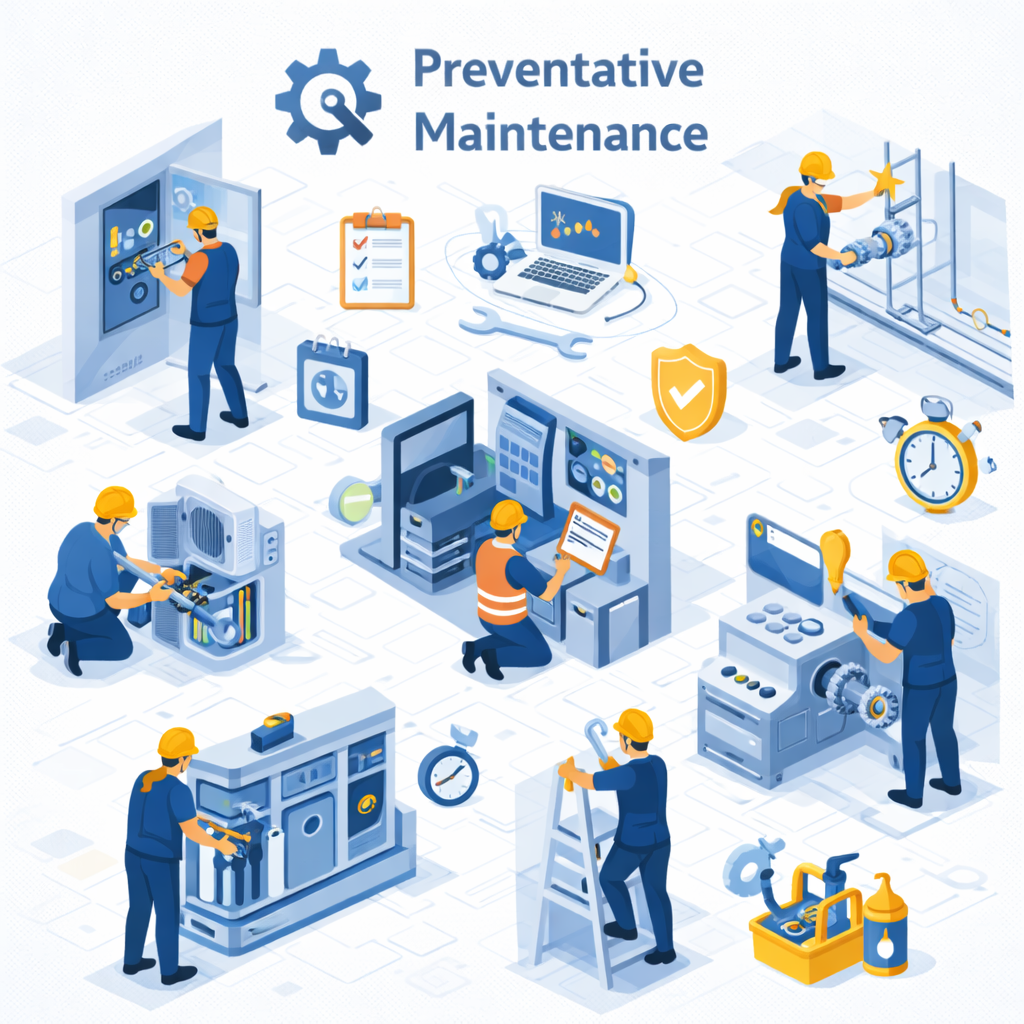
You set up recurring maintenance tasks by site and category—daily, weekly, monthly, or quarterly—depending on the equipment and operational needs. Each task becomes a trackable work item with an owner and due date, so it’s obvious what’s coming up and what’s overdue.

Teams complete PM tasks on mobile or web, add notes or photos when needed, and close the job with a clear record of what was checked and what was done. If a preventive check reveals a problem, the team raises a maintenance work order immediately, linked to the original task, so the issue moves into repair without delay.

Where preventive checks identify safety risks, they can also be logged as an incident/near-miss with corrective actions—so the risk is tracked and resolved, not just noted.

A realistic example day

At the start of the month, planned tasks are already scheduled: HVAC checks, refrigeration checks, emergency lighting checks, and site equipment condition checks. Each location sees what’s due and who owns it.

During a routine check, a technician notices early signs of failure in a unit. They add a note and photo, then raise a work order for repair before it becomes a breakdown. The work order is tracked separately, but still linked to the PM task that discovered it.

By month end, operations leadership can see which sites completed their PM on time, where tasks were missed, and which assets or areas keep generating repairs—without compiling spreadsheets.

What you gain from doing this consistently

You reduce unplanned downtime and avoid repeat faults by catching issues early. You improve accountability because every preventive task has an owner and timeline. You also get a reliable history of maintenance activity—useful for internal reviews, audits, and operational planning.

Over time, reporting helps you spot patterns: sites with higher maintenance burden, recurring failure points, and areas where preventive routines need improvement.

Ready to make preventive maintenance predictable?

This website uses cookies to improve your web experience.